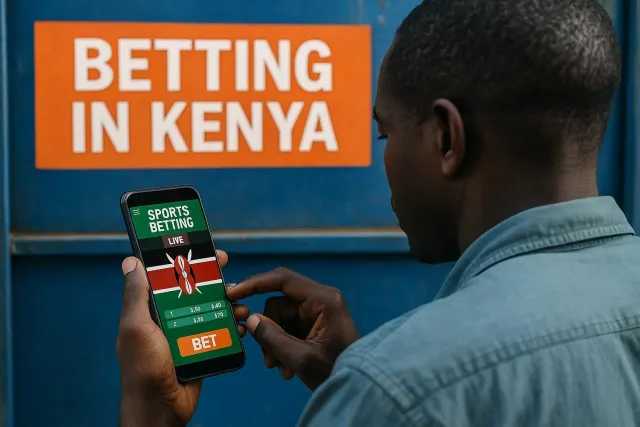
Kenya’s gambling operators now face financial penalties for failing to pay winners within 14 days, under regulations that took effect on 1 July as the government tightens financial, technical and consumer safeguards under the Gambling Control Act, 2025.
A licensee that misses the deadline must pay the Gambling Regulatory Authority a penalty equal to 5% of the outstanding winnings. In comparison, the affected winner becomes entitled to the unpaid amount plus interest accruing at 5% a day for the following 21 days. Continued non-payment beyond that window could trigger suspension of the operator’s license.
The rules tier payout speed to prize size. Winnings of up to Sh500,000 qualify for immediate automated payment once basic identity checks clear.
Amounts between Sh500,001 and Sh5 million must be processed within five working days after additional ownership and anti-money laundering checks are completed.
Payouts of Sh5 million to Sh50 million can take up to 14 working days pending enhanced verification, while jackpots above Sh50 million may take up to 30 working days and can involve structured payouts and financial counselling for the winner.
The regulations give the Gambling Regulatory Authority sweeping powers to license, inspect, audit, suspend and revoke casinos, bookmakers, lotteries, online platforms, bingo, jackpot and pool-betting operators.
Firms must satisfy 18 conditions before opening, including tax and central-monitoring-system integration, adequate gaming capital, equipment inspection, director clearance, data protection certification, approved domains, geolocation controls, encrypted audit logs, segregated customer funds and real-time regulatory access.
Player data must generally be stored within Kenya, and unapproved online gambling operations attract a fine of up to Sh1 million, six months’ imprisonment, or both.
Operators are also required to offer betting limits, session alerts and self-exclusion periods ranging from six months to indefinite exclusion.
Accepting bets from a self-excluded player triggers stake refunds, forfeiture of winnings to the Authority, and possible sanctions against the operator’s license.
Advertising that targets minors or presents gambling as a remedy for financial hardship is prohibited, as are gambling premises and ads within 200 metres of schools.
The draft regulations still carry an internal inconsistency on charitable allocations, with one provision setting the threshold at a minimum of 25% of gross lottery proceeds and another requiring between 30% and 45% of gross revenue, a gap authorities will need to resolve as enforcement begins in earnest.