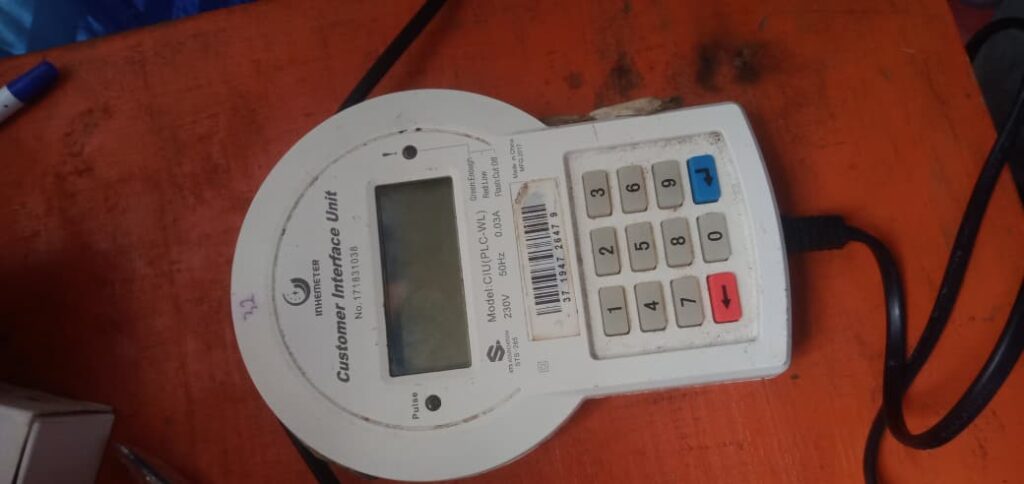
Kenya Power Prepaid toke meter. Photo/JEDCA Media.
Electricity pricing pressure has now fully caught up with households, with fresh adjustments by the Energy and Petroleum Regulatory Authority (EPRA) set to push April power bills significantly higher.
The new adjustment is adding roughly Sh4.72 per kilowatt-hour above the base tariff and extending the cost burden that had already intensified through rising fuel prices.
EPRA issued three separate gazette notices tied to April meter readings, combining a Fuel Energy Cost Charge of Sh3.47 per kWh, a Foreign Exchange Fluctuation Adjustment of KSh 1.2341 per kWh and a Water Resource Management Authority Levy of KSh 0.0154 per kWh.
With domestic base tariffs ranging between Sh15 and Sh25 per kWh depending on usage bands, this additional Sh4.72 translates into a 20–30% effective increase for the majority of households.
The upcoming May billing cycle is expected to reflect April fuel cargo dynamics, meaning current electricity costs still do not fully capture the broader global supply disruptions impacting energy markets.
The financial effect rises directly with consumption levels. A household consuming 50 units will incur an additional Sh236. At 150 units, that increases to Sh708 and at 300 units, households are now looking at more than Sh1,400 in extra monthly costs.
For small businesses consuming around 1,000 units, the adjustment pushes bills up by approximately Sh4,720. These increments apply strictly to energy consumed and exclude the fixed monthly charges under Kenya Power billing structures.
ALSO READ: Gulf Energy secures Sh1.9bn rig for Turkana oil
The Fuel Energy Cost Charge is driven by diesel and heavy fuel oil usage in thermal generation during March 2026. Kenya’s reliance on diesel-powered stations remains particularly visible in off-grid and remote regions, where EPRA data shows fuel costs ranging between Sh193 and Sh295 per kilogram.
In areas such as Kiunga at Sh284.86 and Faza Island at Sh251.58, residents are effectively paying close to double Nairobi-equivalent fuel costs just to sustain electricity supply.
In contrast, geothermal generation from Olkaria stands at only Sh2.59 per kWh, exposing a clear imbalance in Kenya’s energy mix where diesel dependency significantly inflates overall system costs.
The Foreign Exchange Fluctuation Adjustment of Sh1.2341 per kWh reflects Sh1.342 billion in currency losses recorded by KenGen, Kenya Power and independent producers in March 2026.
These losses arise from dollar-denominated power purchase agreements and when spread across 1.302 billion kWh generated and supplied, the impact feeds directly into consumer tariffs.
If sustained, currency-related losses at this level would exceed Sh16 billion annually, all of which ultimately passes through to end users, reinforcing the structural vulnerability of Kenya’s electricity pricing to both global fuel markets and exchange rate movements.