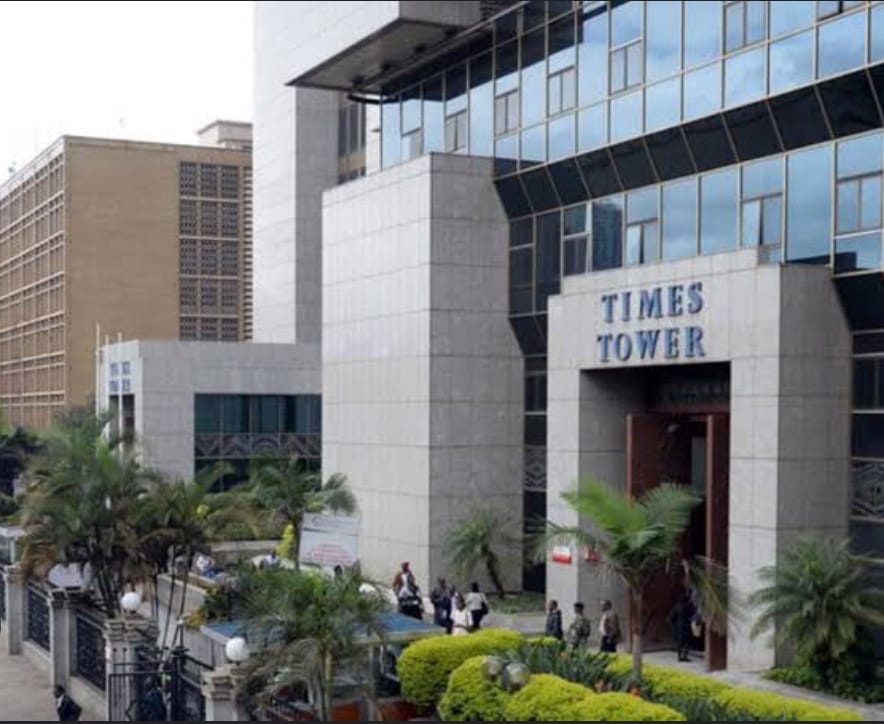
KRA Headquarters, Times Towers, Nairobi. Photo | courtesy.
Kenya Revenue Authority (KRA) is tightening its grip on tax compliance by flagging mobile money transactions linked to taxpayers who continue to file nil returns despite active financial activity.
The move signals a shift from trust-based filing to data-backed verification, as the authority leverages digital payment trails to uncover undeclared income and widen the tax base.
At the center of the crackdown is a growing concern of widespread filing of nil tax returns by individuals whose mobile wallets tell a different story. According to KRA officials, the authority already holds significant financial data and will now actively use it to verify income declarations.
A Data-Driven Tax Net
Mobile money platforms such as M-Pesa have become the backbone of Kenya’s economy. But what was once seen as a loosely regulated financial ecosystem is now under close watch. KRA has confirmed that it will monitor transactions across mobile platforms to identify discrepancies between reported income and actual financial flows.
The agency’s strategy is straightforward is to match declared income with transaction data. If inconsistencies arise, taxpayers will be required to explain the variance.
Additionally, KRA is rolling out pre-filled tax returns, where known income streams are automatically captured. Taxpayers must either confirm the data or justify discrepancies, tightening compliance and reducing opportunities for underreporting.
Targeting the Informal Economy
The crackdown is expected to hit hardest within the informal sector, where mobile money dominates daily transactions. Small business owners, freelancers and side-hustlers who rely on digital payments are now firmly within the taxman’s radar.
Previously, many of these operators filed nil returns, citing irregular income or lack of formal records. However, consistent inflows through mobile wallets now serve as a digital trail of economic activity.
KRA maintains that the objective is not to punish, but to align tax declarations with reality.
Enforcement and Compliance Pressure
Failure to reconcile discrepancies could trigger audits, penalties and enforcement actions. Under Kenyan tax law, undeclared income may attract significant fines and interest, with severe cases leading to legal consequences.
ALSO READ: KRA to Transition to Multi-Vendor, User-Owned Electronic Cargo Seals
Recent data shows that hundreds of thousands of taxpayers have already been flagged for inconsistencies between declared income and financial records.
The authority has also emphasized that filing nil returns remains legal, but only where it reflects genuine absence of income. Where transaction data suggests otherwise, taxpayers will be expected to account for every shilling.
Sealing leakages
KRA’s aggressive compliance push aligns with the government’s broader revenue targets. Kenya is aiming for a multi-trillion shilling tax collection to fund public expenditure, placing pressure on the tax authority to widen the base and seal leakages.