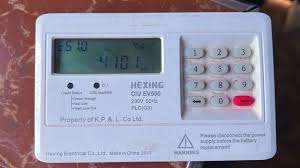
Hexing CIU EV500 Customer Interface Unit for a Prepaid Electricity Meter Used by K.P.L.C. Photo/Courtesy.
Kenya’s electricity consumption has hit a new peak, rising to 2,439.06 MW on December 4, 2025, driven by surging industrial activity and increased customer connections across the country.
The new milestone surpasses the previous peak of 2,418.77 MW, recorded on November 18, 2025, signalling the fastest growth in national electricity demand in recent years as both commercial and domestic uptake continues to rise.
Kenya Power attributes the surge to ongoing investments in the stabilization of the national grid and major infrastructure upgrades. According to the utility, timely completion of network reinforcement projects has improved supply reliability, enabling consumers to draw more power consistently.
Kenya Power Managing Director & CEO, Dr. (Eng.) Joseph Siror, said the trend reflects the country’s expanding economic activity and the growing footprint of new electricity connections.
“We are glad to see this energy demand growing owing to the increased domestic and commercial activities in the country. If you look at the year ended June 2025, industrial customers accounted for more than half of our unit sales, underscoring Kenya Power’s central role in powering industry and economic growth,” said Dr. Siror.
READ: Kenya Power Shifts to Digital-Only Systems for New Connection
He added that the company is now focused on complementing rising demand with increased generation capacity to safeguard the reserve margin and ensure long-term supply security.
In the financial year ending June 2025, Kenya Power connected 401,848 new customers to the grid, contributing 203 GWh in additional electricity sales.
System losses also saw a notable improvement, dropping from 23.16 percent to 21.21 percent, a development credited to targeted interventions such as the accelerated rollout of smart meters, replacement of faulty meters, feeder line upgrades and enhanced energy accounting.
The company further reported improvements in its reliability indices. The System Average Interruption Duration Index (SAIDI) improved from 120.6 hours to 113 hours, while the System Average Interruption Frequency Index (SAIFI) improved from 47.00 to 44.07, reflecting gains in system efficiency.
Kenya Power says electricity demand is expected to rise even further as connectivity projects progress nationwide. It also highlighted ongoing digitization of electricity connection services aimed at enhancing customer experience and reducing processing times.