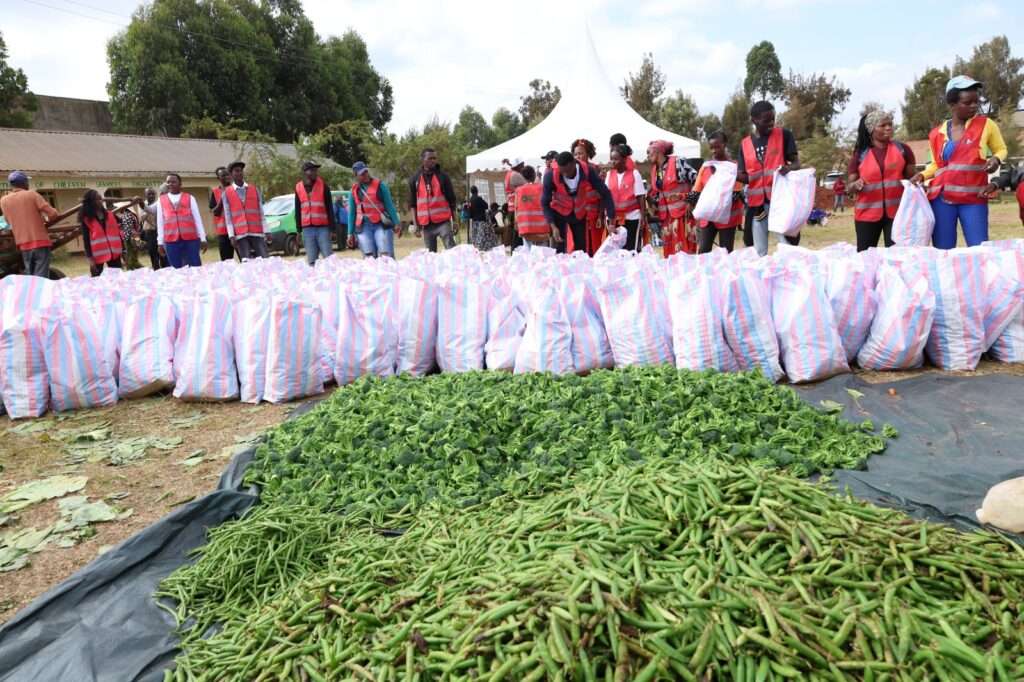
At least 200 vulnerable households in Nairobi’s Dagoretti South have benefited from Zero to One, a food distribution and livelihoods programme spearheaded by Vibo Eats.
The initiative, which has been rolled out across several parts of Nairobi County, is designed to cushion low-income families against food insecurity while reducing food waste and creating income-earning opportunities. Instead of cash handouts, beneficiaries receive fresh farm produce that can be consumed at home or sold through small-scale trading.
Vibo Eats distributes vegetables including tomatoes, cabbages, onions, carrots and potatoes, sourced directly from farmers. The programme prioritizes healthy diets while supporting informal traders and households that rely on daily income to meet basic needs.
Speaking during the distribution exercise held at the Dagoretti South Deputy County Commissioner’s compound, Vibo Eats CEO Joseph Kariuki said the initiative is designed to promote self-reliance rather than short-term handouts.

Kariuki explained that beyond providing immediate food support, the programme introduces beneficiaries to a structured business model that enables them to sell fresh produce and groceries through small-scale shops and kiosks, allowing them to earn income while gaining practical business skills.
Rachel Mwangi, the Operation Manager, Vibo Eats said that their goal is to help vulnerable househols, people with disabilities and the elderly in the community. Implementation is done in collaboration with local chiefs, sub-county administrators and community-based organizations to identify deserving beneficiaries such as persons with disabilities, single-parent families, children’s homes and individuals recovering from drug addiction.
“We want to ensure people get quality food. We work with chiefs amd MCAs to help us to identify and reach out to the vulnerable household. We are serving the elderly, People With Disabilities (PWD) and also chilren homes,” Mwangi said.
Beyond food support, Zero to One operates as a structured micro-enterprise model. Beneficiaries are vetted and organized into groups of three before admission. Each group receives organic produce valued at Sh50,000 or more to sell through kiosks and small shops. Participants retain 40 per cent of the profits, while the remaining 60 per cent is remitted to the company to sustain operations and replenish stock.
The model removes the barrier of start-up capital that locks many urban residents out of small businesses. To limit wastage, unsold produce is returned to a company-run food bank and redistributed to vulnerable households.
The programme currently supports more than 2,000 beneficiaries across Nairobi County. Vibo Eats plans to expand the initiative to other counties and scale volunteer recruitment at the sub-county level as part of its long-term food security and livelihoods strategy.