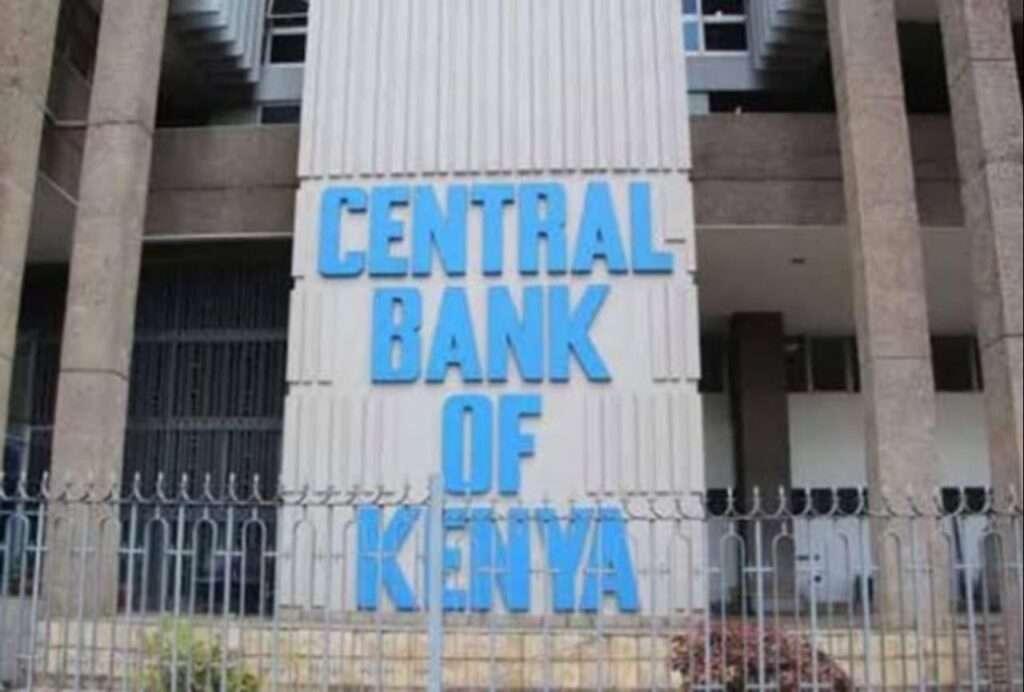
Headquarters Central Bank of Kenya (CBK) in Nairobi. Photo/ Courtesy.
Kenya’s lending environment is entering a new phase following the Central Bank of Kenya’s rollout of a revised loan pricing framework.
The new system changes how banks calculate interest rates, how borrowers are assessed, and how the total cost of credit is disclosed.
Yhe changes are technical, but their effects will be felt across households, businesses, and the banking sector.
The new framework is meant to standardize how banks arrive at interest rates by breaking down the pricing into clear components.
While banks have long applied risk-based pricing, the new rules require them to justify the elements that make up a loan’s final rate and show how each part is calculated.
Borrowers will now see more detail on why they are being charged a certain rate.
How the New Pricing Structure Works
The model breaks down loan pricing into several layers. The first element is the base rate, which is tied to the Central Bank Rate (CBR).
This remains the foundation for all lending rates because any adjustment in the CBR automatically affects how expensive or cheap credit becomes for the entire market.
On top of that sits the cost of funds, which banks must document and disclose more clearly than before. This includes the cost of deposits, the cost of borrowing money from other institutions, and certain operational costs related to lending.
Previously, this figure was blended into margins without much explanation; now, it must be backed by data.
The third component, and the one expected to generate the most debate, is the risk premium. This determines how much extra a borrower pays depending on their perceived likelihood of defaulting.
Banks will assess a borrower’s credit history, stability of income, collateral, and the economic conditions affecting the sector they belong to. These evaluations have always existed, but the new model requires banks to explain how they arrive at the risk score and how it influences the interest rate.
There are also margins and overheads, which banks may add but must justify. CBK’s framework places boundaries on how these additions can be applied, primarily to prevent arbitrary increases. All these components then feed into a final requirement: the all-in Annual Percentage Rate (APR), which reflects the true cost of credit.
This includes charges that have historically been hidden or poorly disclosed, such as insurance fees, negotiation fees, and administrative costs.
What Borrowers Should Expect
From the borrower’s side, the experience of applying for a loan will likely become more documentation-heavy.
Banks must now prove why they are charging a certain rate, so they will need more detailed information from applicants. Credit reports, income verification, and collateral assessments will become more scrutinized.
Borrowers with strong repayment histories may see lower risk premiums, but this will depend heavily on how each bank calibrates its risk models.
Those in sectors considered volatile such as small retail businesses, informal traders, or agriculture may face higher premiums because banks will classify these segments as higher risk.
There is also a possibility that some borrowers will find it harder to access credit Since banks must now justify the risk premium numerically, they may become more cautious in lending to groups with irregular income patterns or inadequate documentation.
While the framework aims to standardize pricing, it may indirectly tighten credit conditions for part of the population.
Another immediate effect is that interest rates are unlikely to fall in the short term.
Given Kenya’s current economic pressures high inflation, a weak shilling, and elevated non-performing loans banks may maintain or even increase some premiums as they attempt to protect themselves from loan defaults.
What It Means for Banks
Banks will need to overhaul how they evaluate risk and communicate pricing. The model requires them to base decisions on quantifiable data, which means investing in credit scoring tools, risk assessment systems, and documentation processes.
Smaller banks, which have less sophisticated risk infrastructure, may face increased operational strain.
Because all pricing components must be disclosed, banks will no longer be able to hide inefficiencies in broad margins.This may force some institutions to adjust internal processes or shift their lending strategies altogether.
Institutions with high-cost structures may find it harder to justify their loans compared to competitors.
he new rules may also influence how aggressively banks lend. In an environment where every risk-related charge must be justified, some banks may reduce their exposure to high-risk sectors rather than price them more expensively and risk regulatory scrutiny.The
Larger Economic Context
The timing of the rollout coincides with a difficult period for Kenya’s economy.on-performing loans remain high, cost of living pressures persist, and private sector credit growth has slowed.
The tighter structure introduced by the new model may interact with these conditions in different ways.On one hand, clearer pricing rules can help borrowers understand the cost of credit and make more informed decisions. On the other, stricter risk assessment could reduce the number of people who qualify for loans, especially in underserved sectors.
The broader impact will depend on how rigorously banks implement the model and how strictly the CBK enforces compliance. As with most regulatory changes, the transition period is likely to be uneven as institutions adapt at different speeds.